Key points
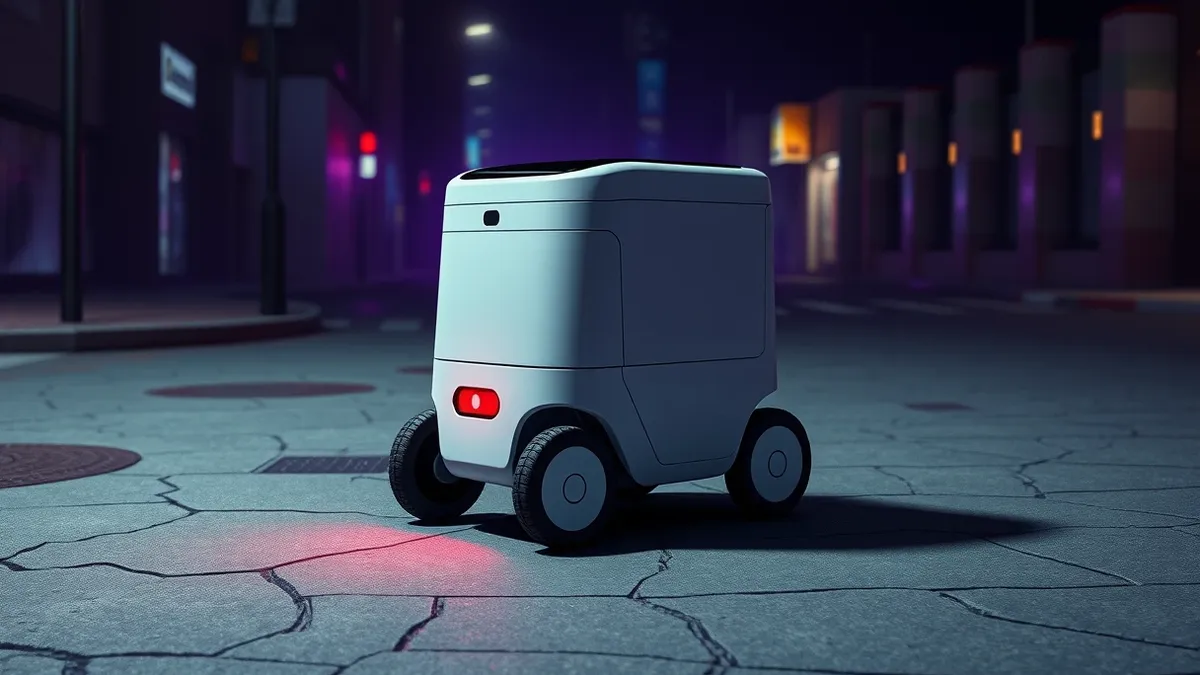
- Carolyn Marvin, a 78-year-old semi-retired UPenn professor, physically obstructs UberEats delivery robots in Philadelphia.
- Police were called regarding criminal mischief involving a delivery robot and asked Marvin to move.
- Marvin argues robots pose hazards to people with mobility issues and displace human jobs.
Carolyn Marvin stands in front of UberEats delivery robots on Philadelphia sidewalks, asserting her First Amendment right to protest corporate use of public space.
What was released or claimed
The Guardian reported that Marvin, 78, blocks robots in downtown Philadelphia as a form of protest.reported She describes her actions as a stand against the incursion of automated delivery systems into public areas.
Evidence: reported
Standing in the way of slop bowls: the woman blocking food delivery robotsaifleet-guardian
Who it affects
The protests involve Marvin, UberEats robot operators, local police, and pedestrians in Philadelphia. Some residents support her stance, while others worry about interrupted food deliveries.
What is still unknown
It remains unclear how frequently Marvin engages in these protests beyond her statement that she has a life and does not do it daily. The source does not detail any formal legal charges or outcomes beyond the police encounter.
What changes, what does not
Marvin has become a local celebrity, with some Philadelphians dressing as her for Halloween. Her refusal to move when ordered by police continues, maintaining the conflict between her protest and municipal enforcement.
Methods and limits
This report relies on a single narrative account from The Guardian. It documents specific incidents of obstruction and police interaction but does not provide data on robot traffic volume, accident rates, or broader regulatory responses. The scope is limited to one individual’s actions in one city.
Why it matters
- Platform architects must consider physical obstruction as a potential failure mode for sidewalk navigation systems.
- Public acceptance of autonomous delivery depends on perceived safety for pedestrians with mobility issues.
- Legal frameworks for First Amendment protests may conflict with corporate deployment of automated infrastructure.
- Local enforcement interactions with robot obstruction are documented in specific incidents.
Topics: robotics, autonomous delivery, urban policy, public protest, UberEats
Updated
Then / now / next
Delivery robots operated in Philadelphia with little public interference.
Marvin actively blocks them, leading to police involvement and viral attention.
Watch for further reports on how local authorities handle similar protests.
Story timeline
- Then Delivery robots operated in Philadelphia with little public interference.
- 07 Nov 2026 Standing in the way of slop bowls: the woman blocking food delivery robots
- Now Marvin actively blocks them, leading to police involvement and viral attention.
- Next Watch for further reports on how local authorities handle similar protests.
The strongest doubt
Counterpoint from the sources
Some residents argue that Marvin’s protests prevent customers from receiving paid orders, highlighting a conflict between protest rights and service delivery.
Ask the article
Local keyword search of this article; no generated answers.Did this article give you the evidence you needed?
Your choice stays on this device. No public tally.Questions readers ask
Why is Carolyn Marvin blocking robots?
She protests the use of robots in public spaces, citing job displacement and safety hazards for people with mobility issues.
Did police arrest her?
Police were called regarding criminal mischief and asked her to move, but the source does not state she was arrested.
Is this happening nationwide?
The source only reports incidents in Philadelphia involving UberEats robots.
Connected stories
Reading receipt
- Carolyn Marvin, a 78-year-old semi-retired UPenn professor, physically obstructs UberEats delivery robots in Philadelphia.
- Police were called regarding criminal mischief involving a delivery robot and asked Marvin to move.
- Marvin argues robots pose hazards to people with mobility issues and displace human jobs.
Still open: How will local authorities balance protest rights with public safety around autonomous robots?
Still open: Will other cities see similar protests against delivery automation?