Key points
- Project Suncatcher satellite booted Tensor Processing Units in orbit this month.
- The on-board Gemma 4 model successfully generated a haiku and other text.
- Google plans further tests on thermal stress and radiation exposure.
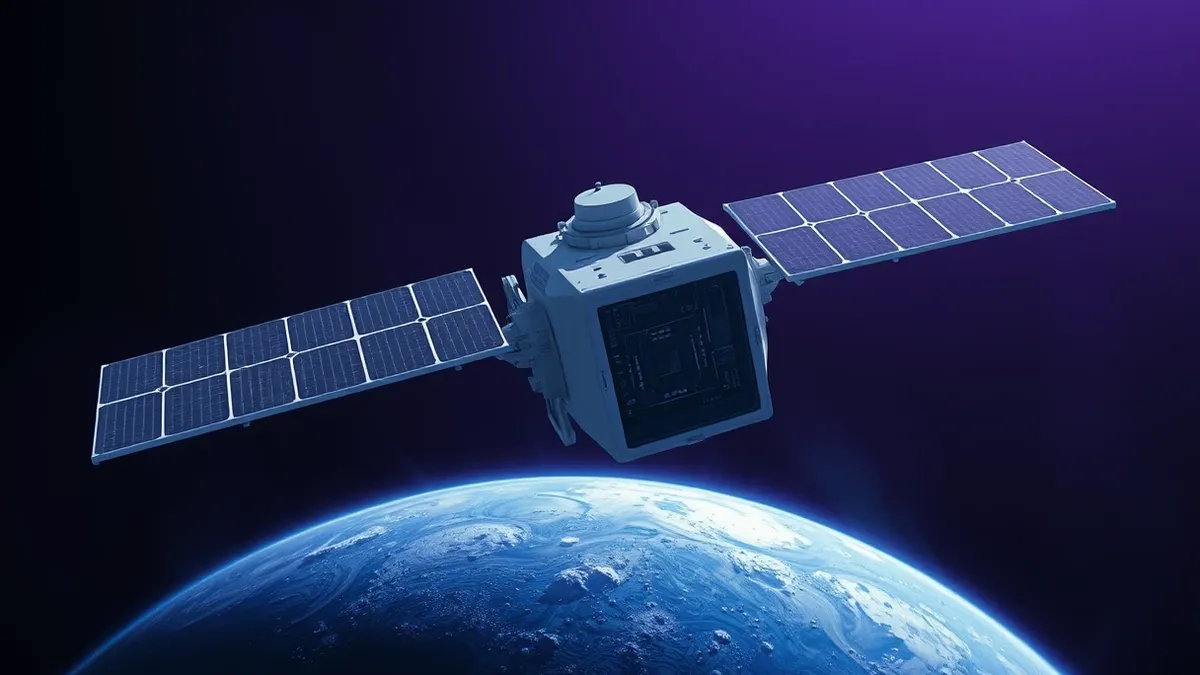
Google confirmed that its Project Suncatcher satellite has executed its first artificial intelligence workload from orbit. The company stated in a blog post published on Friday that the system successfully activated its onboard hardware to process a user prompt.
What was released or claimed
Google reported that the satellite’s Tensor Processing Units were booted up and operational.reported The on-board Gemma 4 model followed a prompt to create a haiku about being in space.reported The output began with the lines "Blue marble below" and "Data streams in."
Who it affects
The development is relevant to researchers and engineers involved in Google’s Project Suncatcher. This experimental initiative aims to eventually establish AI data centers in space. The current test involves the single satellite launched earlier this month.
What is still unknown
It remains unclear how the hardware will perform under long-term orbital conditions. Google has not yet confirmed whether the system can handle sustained workloads or complex inference tasks beyond simple text generation. The reliability of the connection for real-time data transmission is also unverified.
What changes, what does not
The successful boot-up marks the first functional response from the satellite. Google stated that verifying reliable execution in space paves the way for the next milestone. That milestone involves launching twin interconnected satellites in 2027.
Methods and limits
The research tests the ability of TPUs to boot and run the Gemma 4 model in an orbital environment.reported The reported result is the successful generation of a haiku and other space-themed limericks.reported Google explicitly stated that future tests will evaluate performance under thermal stress and radiation exposure. The current limitation is that only initial boot and simple prompt execution have been verified. The system has not yet been tested for long-term reliability or complex computational workloads. This suggests that the hardware is functional but unproven for sustained use.
Why it matters
- Platform architects can observe early results of running large language models on specialized AI silicon in orbital environments.
- The test demonstrates that Gemma 4 can execute prompts on TPUs located on a satellite.
- Future tests on thermal stress and radiation will provide data for designing orbital AI infrastructure.
- The timeline for twin interconnected satellites in 2027 indicates a roadmap for scaling distributed AI compute in space.
Topics: Gemma 4, TPUs, Project Suncatcher, Google, space computing
Updated
Ask the article
Local keyword search of this article; no generated answers.Did this article give you the evidence you needed?
Your choice stays on this device. No public tally.Questions readers ask
What model did the satellite run?
The satellite ran the Gemma 4 model on onboard Tensor Processing Units.
When did Google announce this?
Google announced the successful test in a blog post published on Friday.
What is the next step for Project Suncatcher?
Google plans to test TPU performance under thermal stress and radiation, aiming for twin satellites in 2027.
Connected stories
Reading receipt
- Project Suncatcher satellite booted Tensor Processing Units in orbit this month.
- The on-board Gemma 4 model successfully generated a haiku and other text.
- Google plans further tests on thermal stress and radiation exposure.